
News
The Jackie Robinson Museum Is About a Lot More Than Baseball
Robinson accomplished a great deal on the field, but a museum celebrating his life puts as much focus on his civil rights work.
READ MOREBy 1956, Jackie Robinson was slowing down. The sportswriters knew it. Practically every article on the Dodgers commented on Robinson’s graying hair and his approaching retirement from the game. Even so, he was in the midst of a comeback from a lackluster 1955. His average was up, some of his power had returned, and he even won a handful of votes in the MVP balloting that year. But he was looking for a way out of baseball. Soon, an unusual job materialized. William Black, owner of the Chock full o’ Nuts chain of coffeeshops, offered Robinson a job as Vice President of Personnel, overseeing the hundreds of employees across New York City. On March 3, 1957, having left the confines of Ebbets field, Robinson joined Chock Full o’ Nuts’ working in its Midtown office for over seven years. As he did so, he blazed new trails in business and helped change the culture of another iconic New York institution.
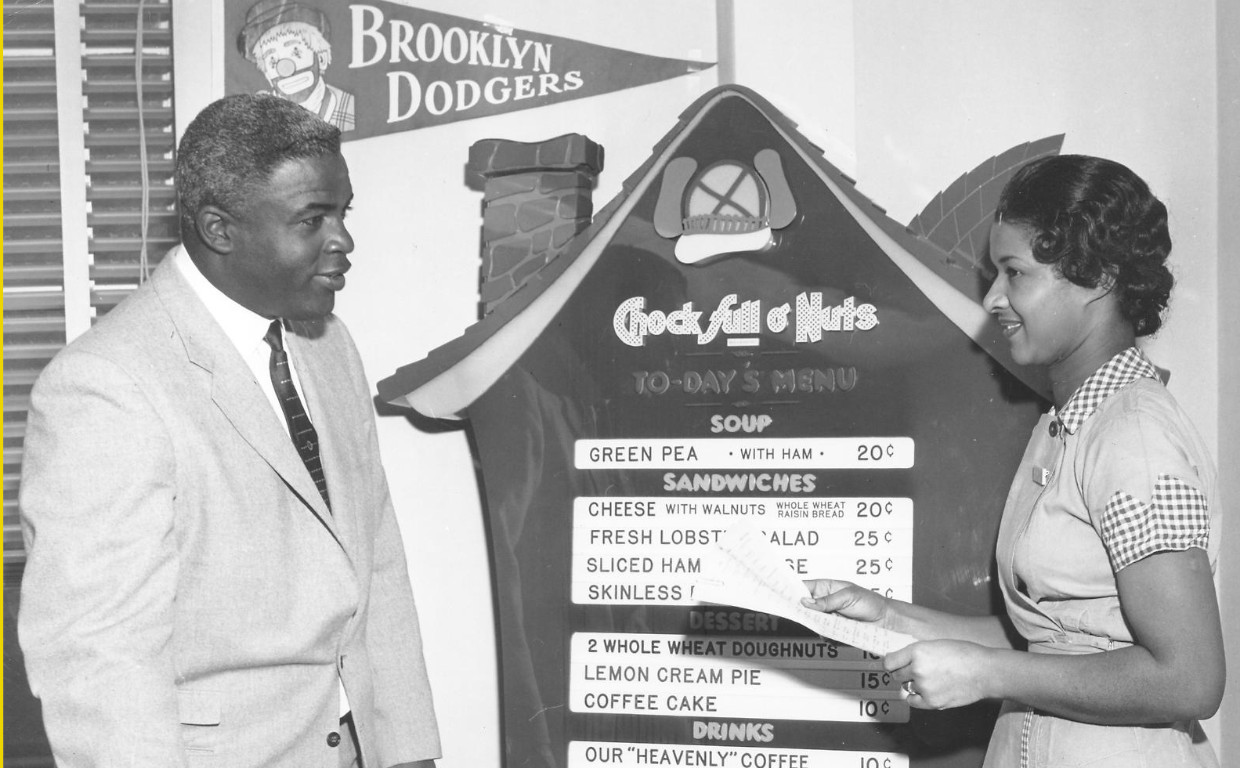
Jackie talks with a Chock employee in front of a menu sign. Getty Images
The idea of a famous ballplayer leaving the game for business is not unprecedented, but for Jackie Robinson, it represented another barrier broken. By accepting a position of vice president, Robinson became the first Black executive at a major company in the United States. Robinson, who had expected to devote his post-playing days to youth work or baseball management, found himself in an executive position that demanded considerable time and attention. Critically, Robinson was not hired as a publicity stunt. He was expected to do the job effectively, just as he had with the Dodgers for the previous ten years.
As for the job itself, Chock Full o’ Nuts was an interesting business. The founder, William Black, the story goes, was an aspiring businessman at the onset of the Great Depression who owned a roasted nut cart in Manhattan. Eventually, he converted his small network of stands into coffee shops offering a cup of coffee for a nickel. The coffee was renowned for its high quality, but the shops are best remembered for their food. Patrons at a Chock full o’ Nuts could get a bowl of green pea soup or “fresh” lobster salad. Perhaps most famously, however, a brave diner at Chock could put a quarter on the counter and be treated to a “nutted cheese” sandwich, a midcentury American culinary classic featuring a schmear of walnut cream cheese between two slices of raisin bread. For those uninterested in or too unnerved by the special, you could get it with date nut bread instead.
Jackie discusses his new role in a Wolper Productions TV documentary about his life and career.
The staff which Robinson would manage were known for their cleanliness and for the (relatively) dignified employment policies: tipping was banned, meaning workers were paid their full wages, and employees had access to generous time off and health insurance plans. Even so, Black saw the possibility that hiring Robinson could reduce labor strife within the mostly Black workforce (again, considered progressive for its time) and discourage unionization. During his tenure, Robinson would have extensive contact with employees. Much of his job involved traveling to the company’s various establishments and its manufacturing plant in New Jersey across the Hudson River, meeting with employees and reviewing disciplinary decisions. He often received communications commending or criticizing the quality of service at various locations. Diners would praise the attentiveness of the servers who worked in a specific corner of the store or decry inefficient cleaning practices. Robinson’s subordinates would also provide detailed reports, discussing situations that would, for example, cause pastries to fall out of their containers or particularly cantankerous managers.
Robinson, by all accounts, handled the job well. He commuted each day from his Stamford home to his well-appointed office in Midtown. Robinson knew his time in baseball was over. “When I retired from baseball, I fully realized there was no future in the game for me,” Robinson told Canadian reporter Al Parsley in 1957.1 “Here I like my work, my boss, and am positively fascinated with dealing with people in employee relations.” Soon, Robinson got to work. Over time, he earned a reputation as a tough but fair manager. He also expanded the suite of benefits available to employees: In 1962, the company purchased a resort in Warwick, New York, that Robinson and Chock renamed “Camp Utopia.” There, the company offered affordable vacations and camp activities for employees and their families away from the bustle of the city. The resort, like other aspects of company life, was integrated and priced affordably. “We don’t make any conscious effort to foster integration,” said another Chock manager. “It just seems to come naturally when people are together having a good time.”2 Robinson also helped put his thumb on the scale during at least one worker’s immigration dispute.3
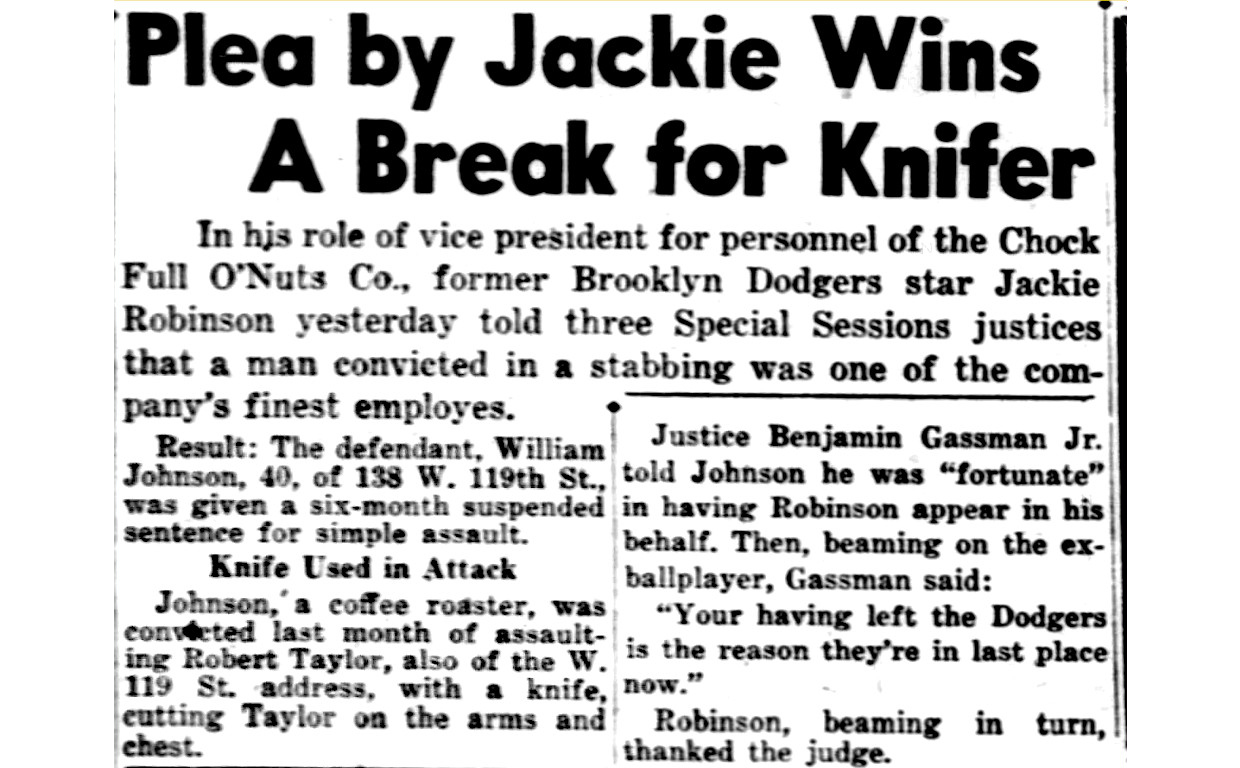
In one instance, Jackie Robinson defended an employee in court who had been attacked in his store. New York Daily News
Of course, disagreements with workers remained. At one point, Robinson was briefly chastised by the National Labor Relations Board after he was accused of interfering in a failed union election at the company’s New Jersey plant.4 While he was largely resolved of wrongdoing, the realities of being in a management position over other Black workers were not lost on him. He often remarked that having to dismiss an employee was the worst part of his job, though he often found himself defending the actions of his personnel when his fellow executives would not.
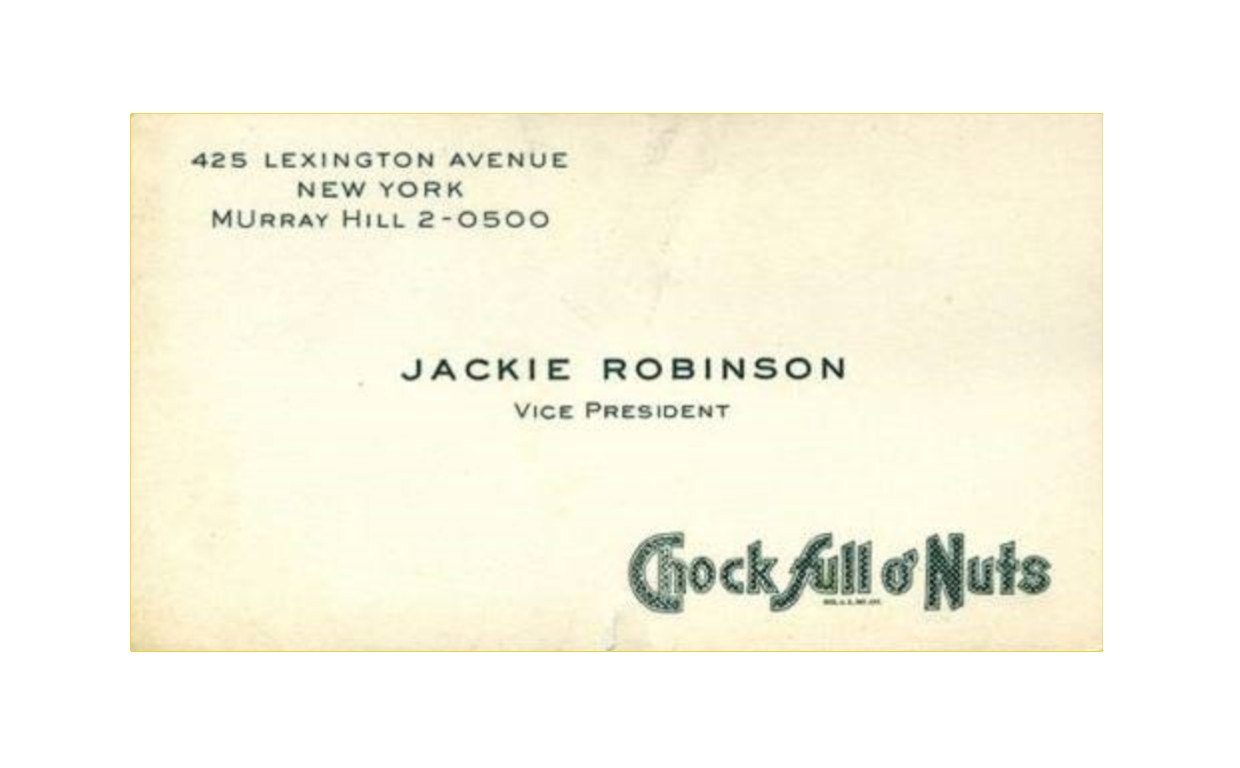
Jackie Robinson’s business card at Chock. Jackie Robinson Museum
For all the realities of his new job in corporate America, perhaps the most important part of his work was the time he spent away from it. While employed at Chock, William Black gave Robinson wide latitude for his civil rights work. From his earliest days in the C-suite, Robinson traveled the country with the NAACP, raising money for the organization and taking extensive leave from the job to do so. As the movement began to ramp up in the early 1960s, Robinson continued to speak and write with Black’s blessing, even when it caused controversy. “I bought Robinson’s services as the personnel manager of our company,” Black once said to an irate Milwaukee reporter. “I did not buy his right to speak and think his mind.” 5 Chock’s management was more than aware of Robinson’s penchant for attracting controversy on and off the baseball field. Even so, William Black understood that his people skills were an irreplaceable asset. Robinson used financial stability from his job to continue to speak out about civil rights and collaborate with the various organizations who were forming the base of the civil rights struggle. Robinson even convinced William Black to make some sizeable donations of his own, including to Jackie Robinson’s 1962 fund to rebuild three Georgia churches burned by white supremacists.
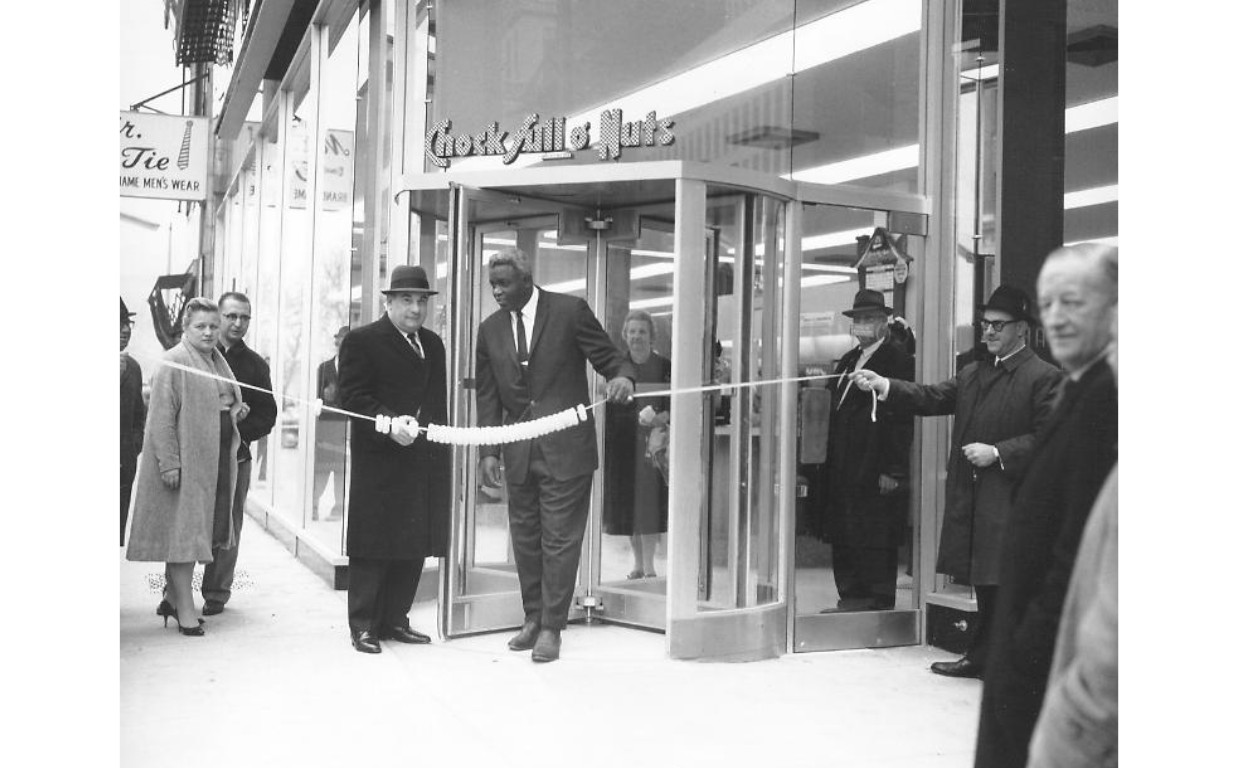
Jackie Robinson and William Black cut the ribbon at a new Chock location.
Almost as important for Robinson, however, was the platform the job gave him to speak on issues of race and employment. This was critical for his outlook: As he saw strides made towards political equality and desegregation in the 1950s, Robinson became increasingly convinced of the importance of equality in employment—both in terms of hiring and one’s ability to advance up the corporate ladder. Jackie viewed his employment at Chock through a similar lens as he did his arrival in baseball. His remarkable career with the Dodgers helped dispel racist doubts that white players would not accept a Black teammate. Similarly, Robinson used his high-ranking position to demonstrate that white employees would respect and work productively with a Black executive in the corporate workplace as well.
Hence, Robinson saw that his position at Chock allowed him to become a messenger for racial equality in a new field. Speaking to the American Management Association in 1957, Robinson used his new platform to tell his audience that an integrated workforce was not necessarily a moral duty, but simply an effective business practice. Moreover, he stressed that it was not merely enough to have a diverse workforce, but to ensure that all workers can advance. “I can recall that there was the period in democratic American business life when the corporation could say: ‘We hire Negroes. How can anyone accuse us of prejudice or discrimination?’” said Robinson. He continued: “But today, the hiring of citizens of minority status is not the sole answer. In fact, when you, with the power to hire and supervise the destinies of thousands upon thousands of workers, take on a Negro college graduate to sweep the floor or work on other menial jobs, you are not democratic.”6 His appearances at management conferences and trade shows allowed him to reach a new, often conservative audience that was often reluctant or unwilling to stand on the side of desegregation—a group not unlike the sportswriters he had proven wrong a decade earlier.
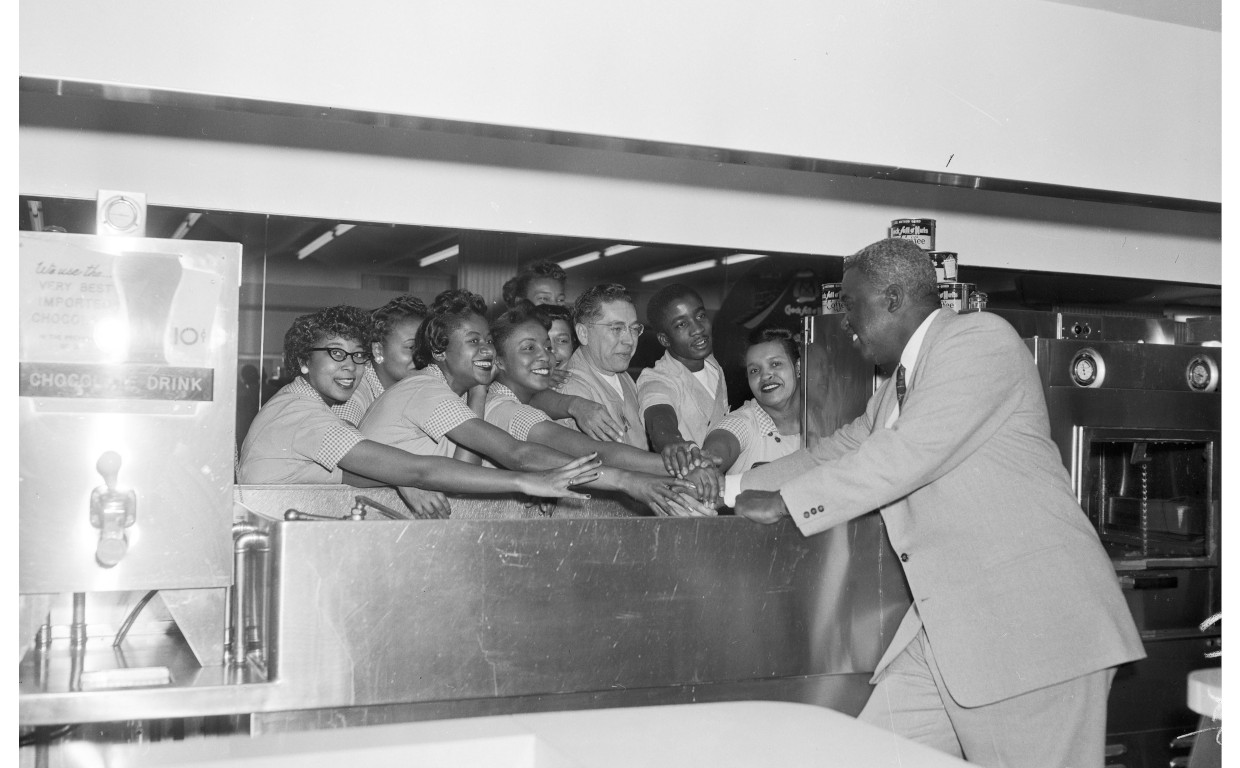
Jackie Robinson meets workers at a Chock restaurant. Getty Images
Eventually, however, Robinson’s tenure at the company would come to a close. As his civil rights commitments grew more taxing, Robinson spent more and more time away from the office. Soon, he found that he was being excluded from critical personnel decisions. When a group of employees was summarily dismissed for union organizing, Robinson was not allowed to review the decision.7 In early 1964, when his second contract with Chock ended and he was unwilling or unable to quash the union effort, Robinson’s contract was not renewed. He soon took a job with Nelson Rockefeller’s ill-fated presidential campaign, and his time with the coffee shop was in the rearview mirror.
Chock itself was not long for this world, either. By the 1970s, the lunch counters began to close down. William Black’s empire was gradually sold off, with the coffee brand now owned by an Italian holding company. Chock coffee is still available in grocery stores. In a twenty-first century collaboration with the Jackie Robinson Foundation (JRF), the non-profit organization founded by Rachel Robinson, Chock coffee cans featured an image of Jackie Robinson seated at his desk, a reminder of his role in shaping the history of the storied brand—with proceeds benefiting the work of JRF.
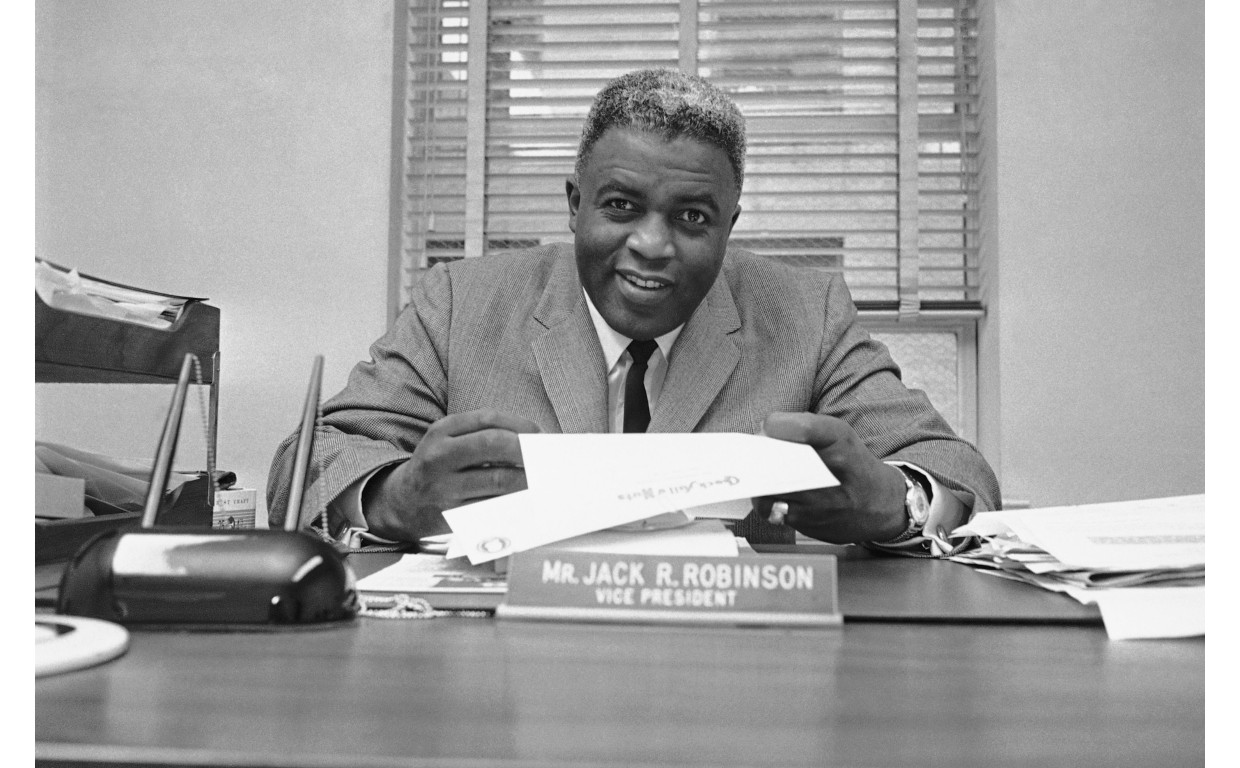
When Jackie Robinson left baseball, he did so with a desire to contribute to the ongoing fight for racial equality. His job with Chock gave him two platforms. On one hand, he was able to begin his work with the burgeoning civil rights groups that routinely demanded his time and energy. It also gave him the opportunity to grow his expertise in the field of business and make the case that an integrated workforce—which Jackie pioneered in Brooklyn a decade before—was good business practice. Chock full o’ Nuts was a New York relic on its own terms: millions of commuters passed through the lunch counters’ doors over their two decades of dominance in the city. But it is still remembered for the work of one of its executives, a man who helped reshape the face of business in the American midcentury.
News
Robinson accomplished a great deal on the field, but a museum celebrating his life puts as much focus on his civil rights work.
READ MORE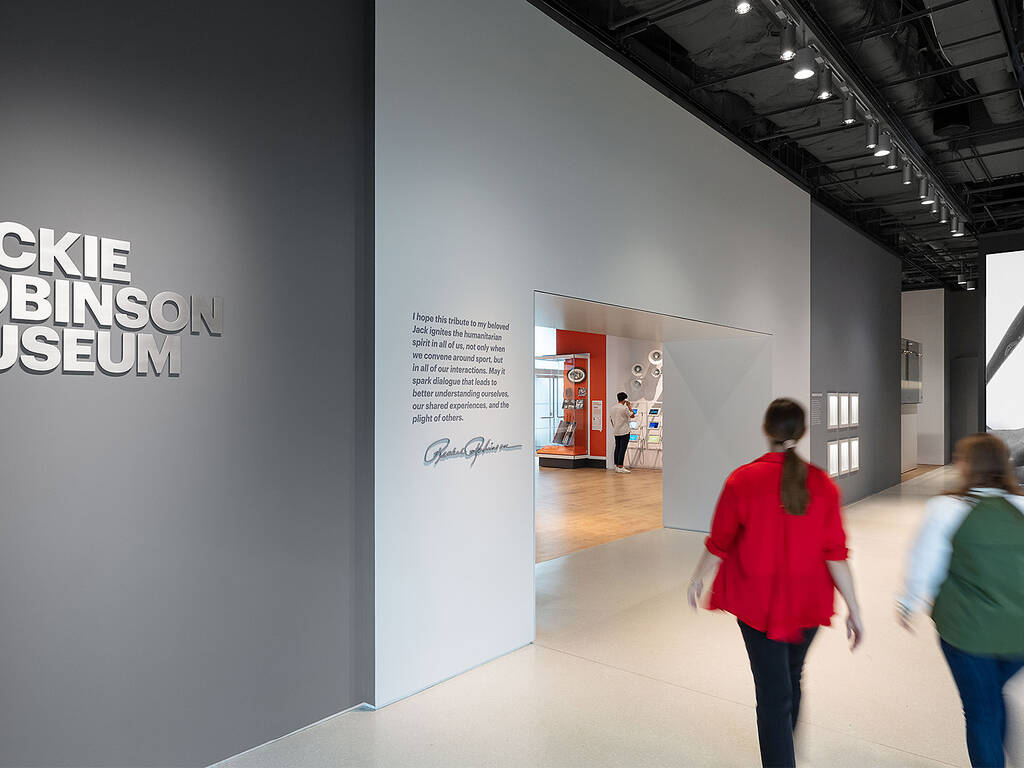
News
Visitors will also get to explore an immersive experience “to better understand the racism and prejudice Robinson encountered beyond the baseball field, as well as stories of his lasting influence on sports, politics and entertainment today.”
READ MORE
Programs & Events
Get the scoop on new programs and resources for teachers, students, and families!
READ MORE