
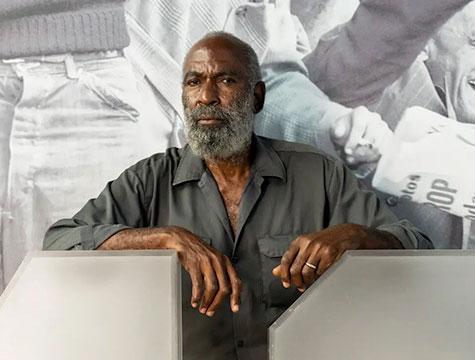
News
The Jackie Robinson Museum Is About a Lot More Than Baseball
Robinson accomplished a great deal on the field, but a museum celebrating his life puts as much focus on his civil rights work.
READ MOREPlan your visit or become a member today! Mark your calendars for Jackie Robinson Day events next month!
How do we tell the stories behind the artifacts at the Jackie Robinson Museum? Sometimes the answers to our questions can be found as close to our doors as Harlem or Flatbush. In many cases, however, the stories begin in cities and towns hundreds of miles away from the confines of Ebbets Field. On July 19, 1947, Charles McConnell, a Black teenager living in Johnson City, Tennessee, picked up his pen and began to write one of those stories.
That day, McConnell wrote a brief letter to Jackie Robinson, who was in the fourth month of his first season with the Brooklyn Dodgers. By July, Robinson had hit his stride and was proving that he was truly big-league material. His victories on the field traveled across the radio waves to reach Americans of all backgrounds. McConnell, who enjoyed sports of all types, was following Robinson closely. And like many youngsters around the country, he knew that something important was happening in America.
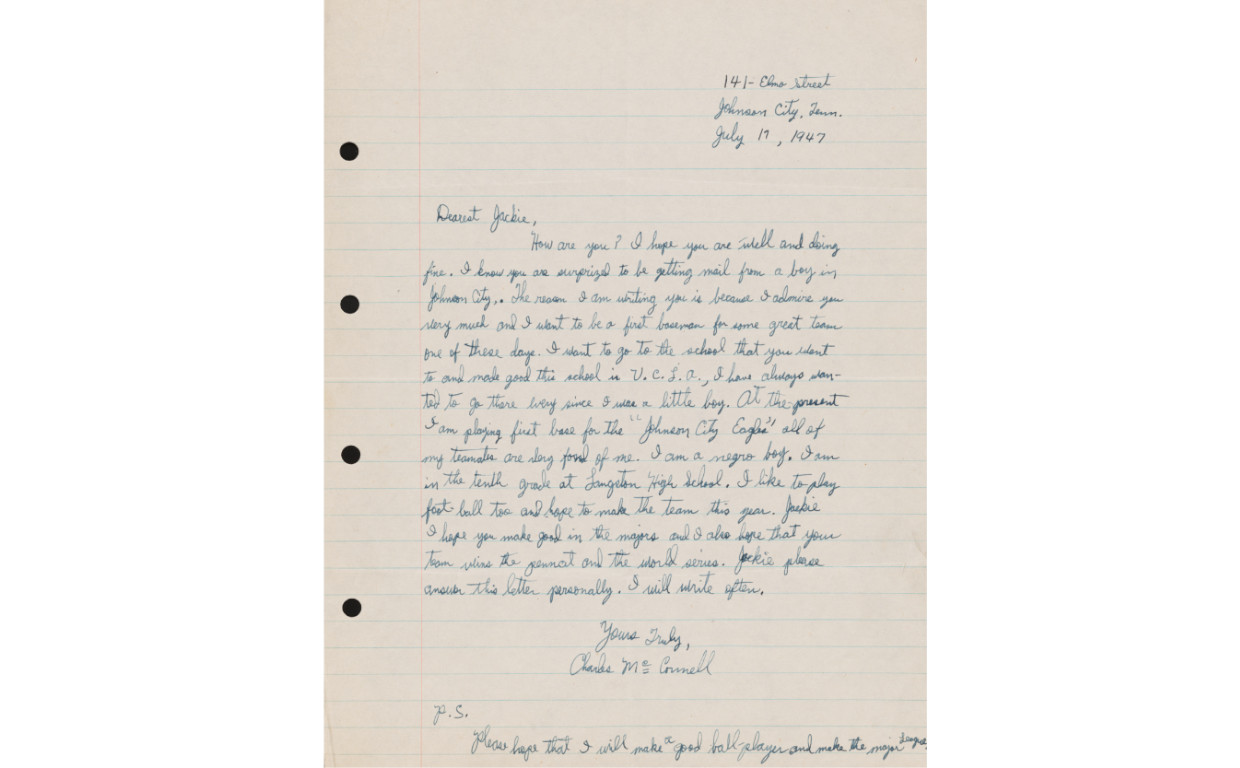
Charles McConnell’s letter to Jackie Robinson, July 19, 1947, Library of Congress. View transcript below.
Dearest Jackie, How are you? I hope you are well and doing fine. I know you are surprised to be getting mail from a boy in Johnson City. The reason I am writing you is because I admire you very much and I want to be a first baseman for some great team one of these days. I want to go to the school that you went to and make good the school in U.C.L.A. I have always wanted to go there ever since I was a little boy. At the present I am playing first base for the “Johnson City Eagles” all of my teammates are very fond of me. I am a negro boy. I am in the tenth grade at Langston High School. I like to play football too and hope to make the team this year. Jackie I hope you make good in the majors and I hope that your team wins the pennant and the world series. Jackie please answer this letter personally. I will write after.
A reproduction of this heartfelt letter, originally preserved in Dodger secretary Arthur Mann’s papers in the Library of Congress, is on display at the Jackie Robinson Museum. On its own, the letter is a warm tribute to the awe-inspiring power Robinson had, even for those who never saw him play. In summer 2025, however, a resident of Johnson City saw the letter and connected the Jackie Robinson Museum with the story of a man who used sports to bring together his own community in an era of progress and change. Working with the Langston Center in Johnson City, Tennessee (a community organization located in the former high school McConnell once attended), the Jackie Robinson Museum can now tell the story of a man whose life was touched by Robinson’s on-field triumphs and used that inspiration to fight for the betterment of society as a whole.
Elva Morrison, sister of Charles McConnell, describes the culture of Johnson City during her childhood. Courtesy of Johnson City, TN
Like Robinson, McConnell developed a love of sports from a young age in a city where segregation was pervasive, but not absolute. “Our neighborhood was always integrated,” noted McConnell’s sister Elva Morrison in a recent interview. “Except the schools…we were just neighbors!” Langston High School, at the time, served the city’s small Black population. There, McConnell played first base and developed a love of baseball, especially Dodgers stars Jackie Robinson and Roy Campenella, whom he could follow in the newspapers and on the Dodgers’ national radio network. Soon, McConnell joined the Army during the Korean War and returned to Johnson City after his stint in the service.
McConnell began his career as an official in 1964 and became the first African American in the region to call basketball and football games. The job, according to Danny Williams, a deacon at McConnell’s Friendship Baptist Church, was not easy. “He was in demand because he was a good official,” Deacon Williams noted. But he added, “Going to a neighboring county that might not have been as welcoming [to a Black referee] and being in charge, blowing the whistle, and calling a foul on their boys? He would talk about having to get out the back door sometimes, and get to safety.” Demanding respect as an authority while being a trailblazer on one’s own terms was very difficult, something that Black officials at all levels learned in that era.
Deacon Danny Williams discusses Charles McConnell’s officiating career and the challenges he faced. Courtesy of Johnson City, TN
Even so, he was able to command the respect of the eastern Tennessee athletic community, becoming an in-demand official for both high school and college games. He took his work seriously, and, according to Rev. Lester Lattany of Friendship Baptist, would pray at home over missed calls and other mistakes that come with the territory of being an official. He served as a mentor to both younger officials and the students under his watch, reminding them of the importance of the world beyond the court and gridiron. Like Robinson himself, who frequently volunteered as a coach at the Harlem YMCA, McConnell saw the power of sports as a tool to build community for young people, and he worked to build that community for over forty years. In honor of his service, McConnell was inducted into the Tennessee Secondary School Athletic Association Hall of Fame in 2022.
Rev. Lester Lattany of Friendship Baptist Church discusses the respect Charles McConnell earned as a referee and the legacy he left behind. Courtesy of Johnson City, TN
Charles’s wife Ann also led civil rights efforts in Johnson City as well. In 1965, their family sued the school system for slow-walking desegregation, and won. Both were members of their local NAACP chapter, and both surely benefitted from Jackie Robinson’s fundraising work for the organization throughout the 1950s and 1960s. The McConnells fought Jim Crow in their own hometown, and they helped build a more equitable society for the generations that followed. Many of the students in the games McConnell refereed were the first beneficiaries of the desegregated schools he fought for.
Charles McConnell passed away in 2022 at the age of 89. His letter to Jackie is a reminder of how Jackie Robinson’s incredible story can only fully be understood in the context of the millions of people who followed his 1947 season, hoping that he would make the grade as a big-league ballplayer. Children like McConnell followed Robinson’s story because they knew that change was in the air. Robinson’s triumphs carried along the airwaves to cities and towns across America, and inspired others to take up his mantle and use sports as a catalyst for change in their own communities.
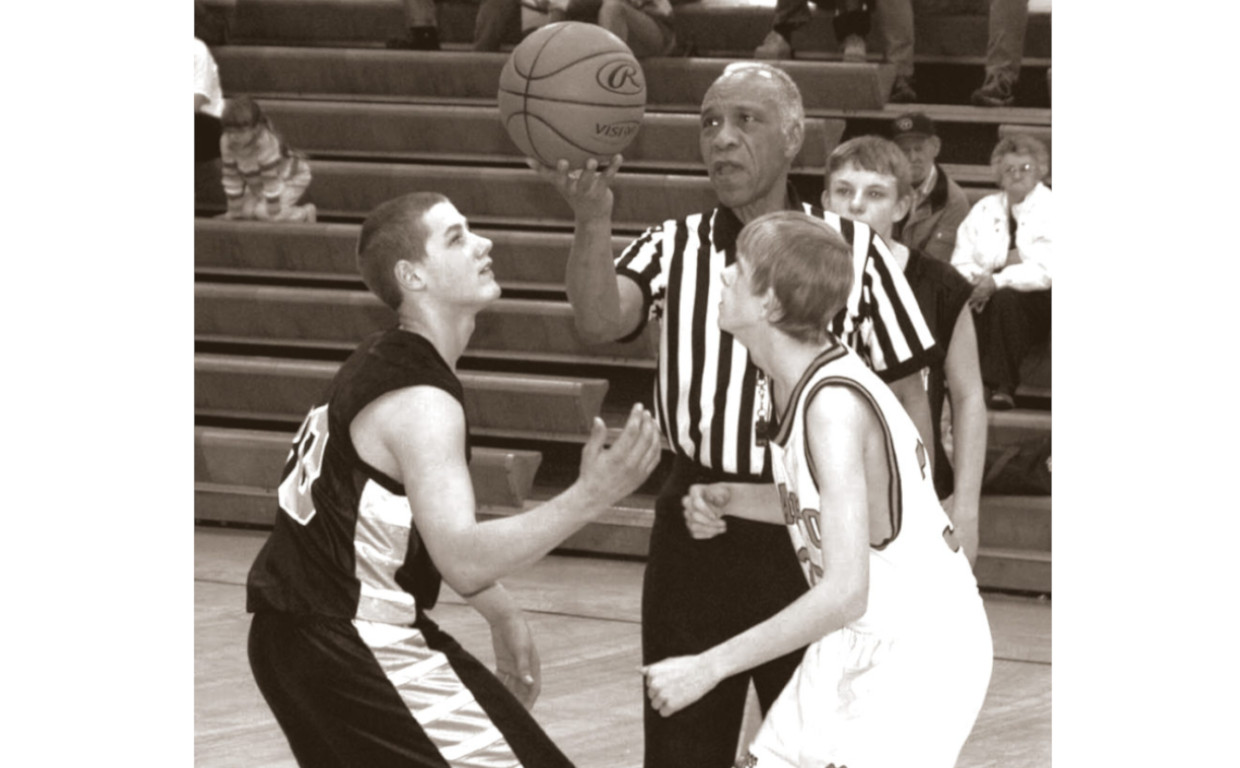
McConnell prepares a jump ball during a high school basketball game. Johnson City News and Neighbor
McConnell’s story is also a testament to the power of doing critical historical work within our own communities. Not everyone got the opportunity to write a letter to Jackie Robinson, but millions of Americans have stories about how their lives were shaped by Jackie and other titans of the movement in the forties, fifties, and sixties. Artifacts in the Jackie Robinson Museum are not just jerseys on mannequins and plaques on walls—they carry the stories of Robinson’s triumphs and struggles—and the hopes and dreams of the people who followed every stolen base and stump speech. These stories exist in every community, and it is up to us to find and preserve them, just as Charles McConnell’s church and community have done with his life and work on and off the field.
Special thanks to Adam Dickson, Nicholas Harrison, Pauline Douglas, Elva Morrison, Danny Williams, Rev. Lester Lattany, Kelvin Scott, Friendship Baptist Church, the Langston Centre, and Johnson City, TN community for their time and support in the process of producing this post.
News
Robinson accomplished a great deal on the field, but a museum celebrating his life puts as much focus on his civil rights work.
READ MORE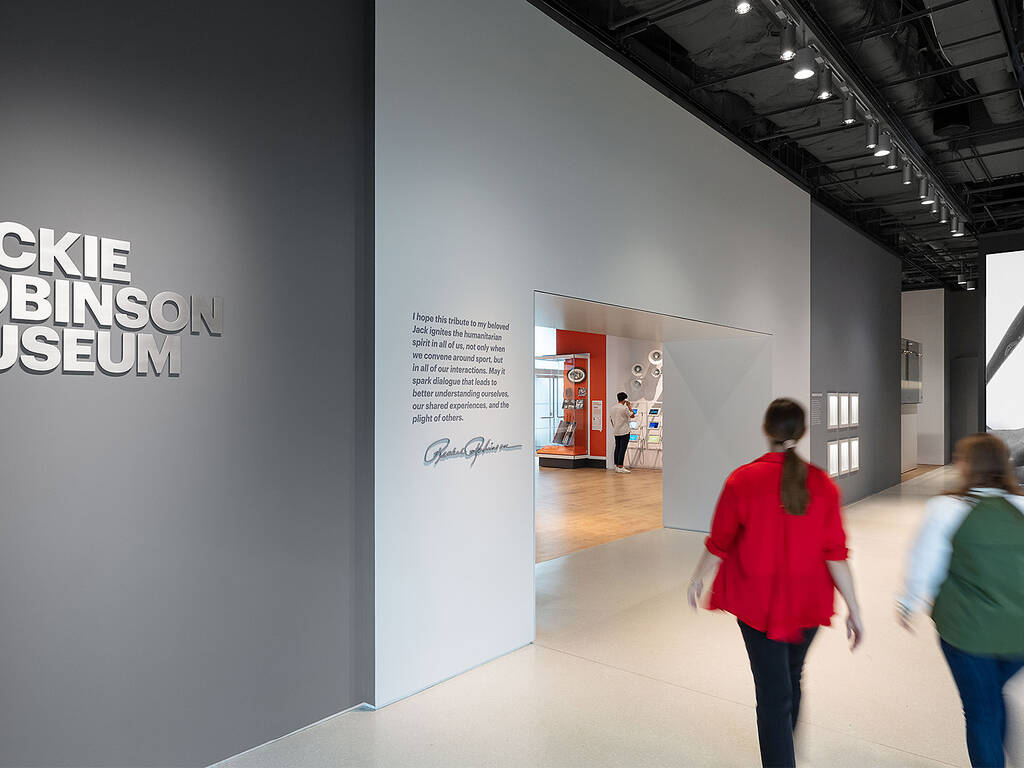
News
Visitors will also get to explore an immersive experience “to better understand the racism and prejudice Robinson encountered beyond the baseball field, as well as stories of his lasting influence on sports, politics and entertainment today.”
READ MORE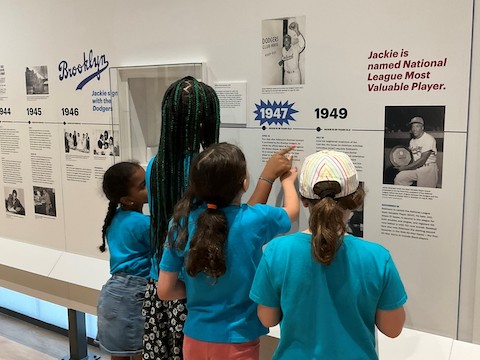
Programs & Events
Get the scoop on new programs and resources for teachers, students, and families!
READ MORE