
News
The Jackie Robinson Museum Is About a Lot More Than Baseball
Robinson accomplished a great deal on the field, but a museum celebrating his life puts as much focus on his civil rights work.
READ MOREPlan your visit or become a member today! Join us for Robinson’s Readers and our Third Thursday Lunchtime Tour this month!
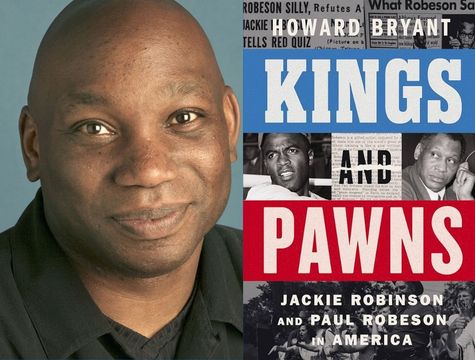
This post is excerpted from Kings and Pawns: Jackie Robinson and Paul Robeson in America by Howard Bryant.
DECEMBER 1949, TEN DAYS BEFORE CHRISTMAS. Jackie Robinson, the most famous ballplayer in America, is home—the first Christmas on his new street in his new house in St. Albans, a quiet, integrated neighborhood in Queens boxed in by Jamaica to the east, Long Island to the west, and Idlewild Airport, New York’s new, year-old airport to the south. It is a festive time, houses adorned with Christmas lights, solo candles flickering from front windows. Ten days before Thanksgiving, Robinson’s son, Jackie Jr., celebrated his third birthday. Over cake and ice cream, the family enjoyed another milestone: Robinson had just won the biggest accolade of his career: the National League Most Valuable Player award. His wife, Rachel, is pregnant with their second child. Robinson tells the newspapermen he hopes it will be a girl.
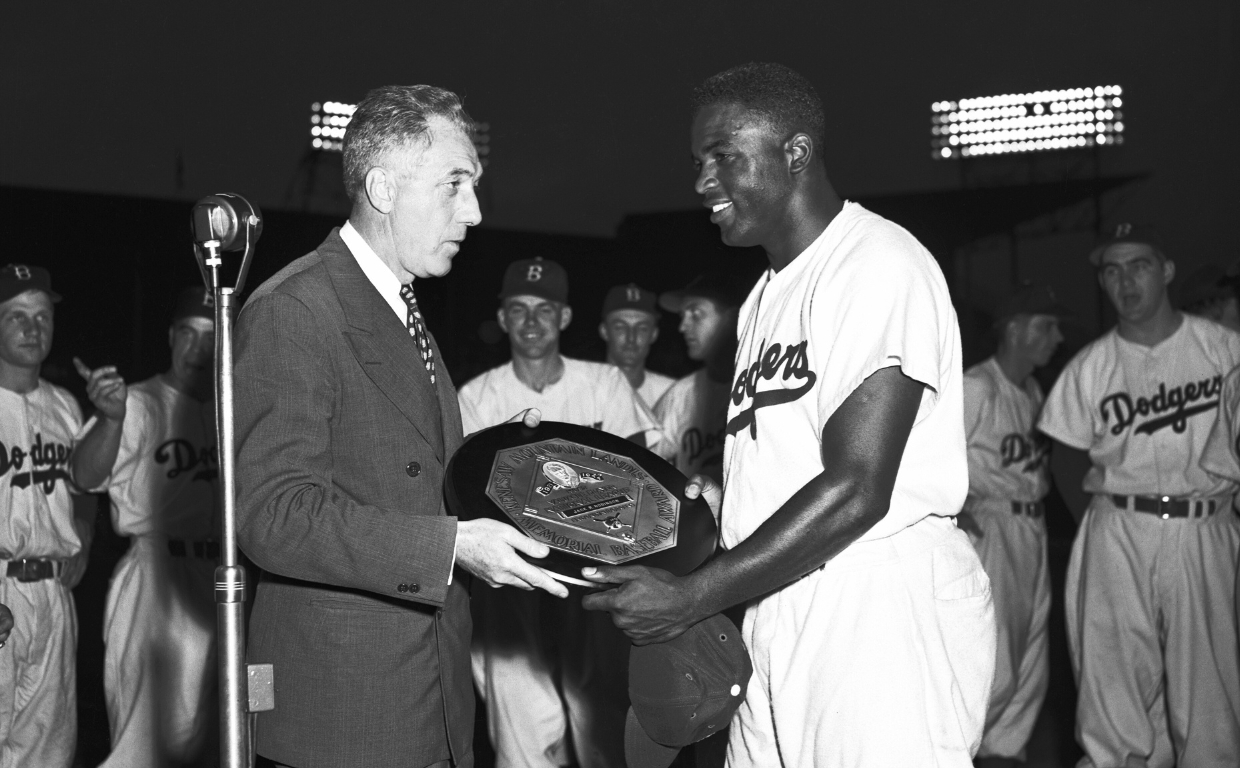
Jackie Robinson receives the Most Valuable Player Award from National League President Ford Frick, July 6, 1949, Getty Images
Three days a week, on Mondays, Wednesday, and Fridays, Robinson works the floor as a salesman at Sunset Appliance Store in Rego Park, not far from his house. At the time, ballplayers, even the best ones like Robinson, work second jobs during the offseason—but for Brooklyn fans, his celebrity is its own gift, a major coup for the store, and further cements him as a Brooklyn hero, not some distant superstar who leaves town after the final out of the season, but one who stays, one of them.
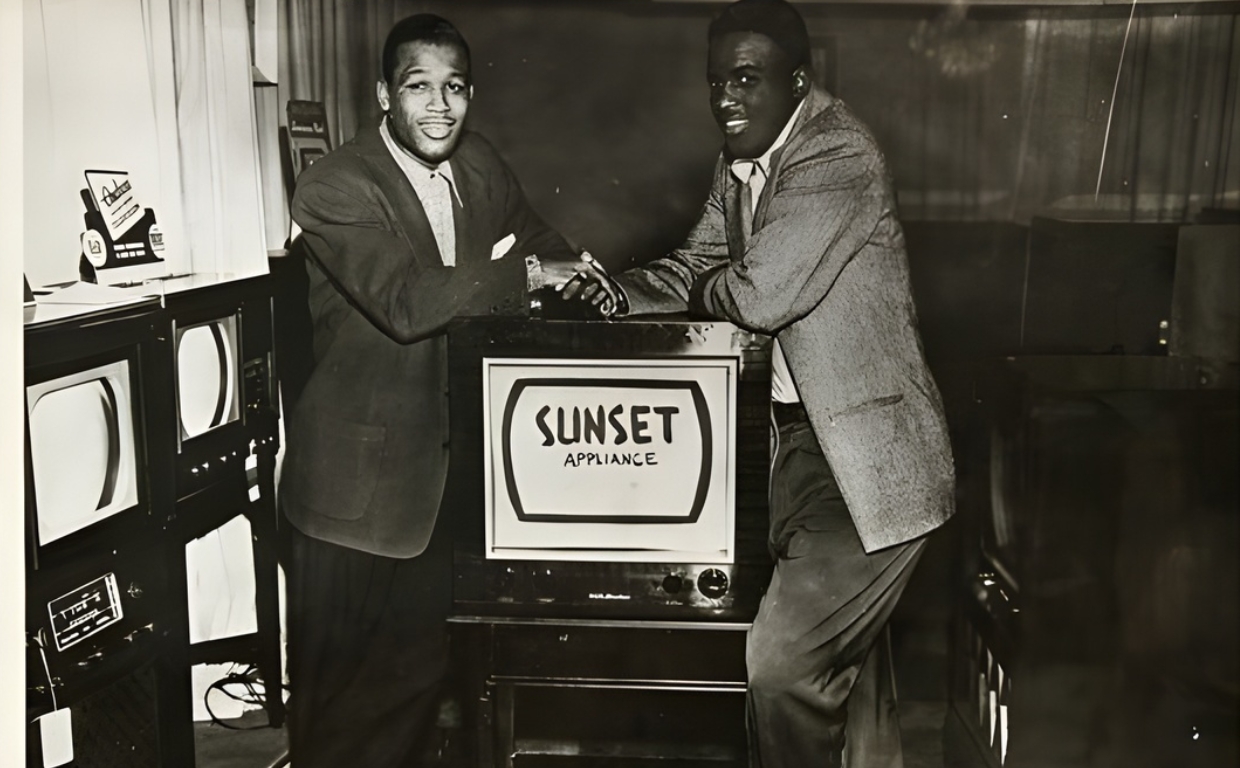
Sugar Ray Robinson purchases a TV from Jackie Robinson at Sunset Appliance, Rego Park, Queens, NY, 1949.
Customers who purchase an RCA Victor television from Robinson receive an autographed big-league issue bat or ball, and can arrange to have their photo taken with him on the days he is in the store. Even The New Yorker, the city’s magazine for the wine and cheese crowd, ventures out to Brooklyn to pay a visit to New York’s most recognizable salesman.
It is a precious snatch of time. In a little over a month, before his thirty-first birthday, Robinson will hand out cigars in Harlem, celebrating the birth of his daughter, Sharon. The home in St. Albans—a two-story, single-family Colonial with a spacious backyard on a quarter-acre lot at 112-40 177th Street—stands as a testament to the possibilities this country believes it offers all people, the possibilities for better, despite the unforgiving realities of Black life. Within this moment, coated in the sugary haze of professional success, a new home, a beautiful wife, and a growing young family warmed by the comforting glow of Christmastime, Jackie Robinson has never been more ascendant, more complete, more American.
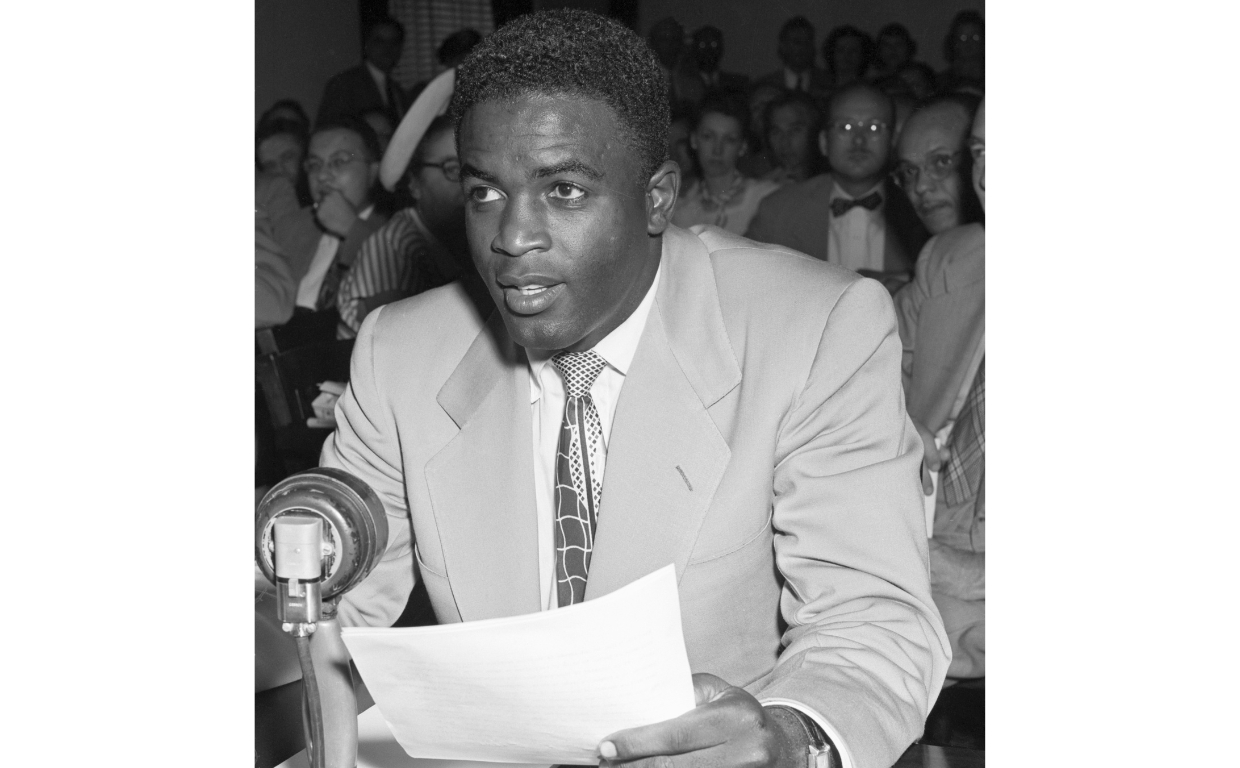
Jackie Robinson testifies at the House Un- American Activities Committee, July 18, 1949, Getty Images
He had proven he was a great player, lunchtime on the afternoon of July 18, 1949, after he had left Room 226 of the Old House building on Capitol Hill following his testimony before the House Un-American Activities Committee (HUAC), Jackie Robinson had become more than a baseball player. He had testified to the committee against the political opinions of the great bass-baritone singer and actor Paul Robeson, who was more than twenty years Robinson’s senior, himself once beloved by millions of Americans, himself like Robinson once a great football player, once, like Robinson, one of greatest athletes in the nation—and once, as Jackie Robinson was now, the most famous Black man in his country.
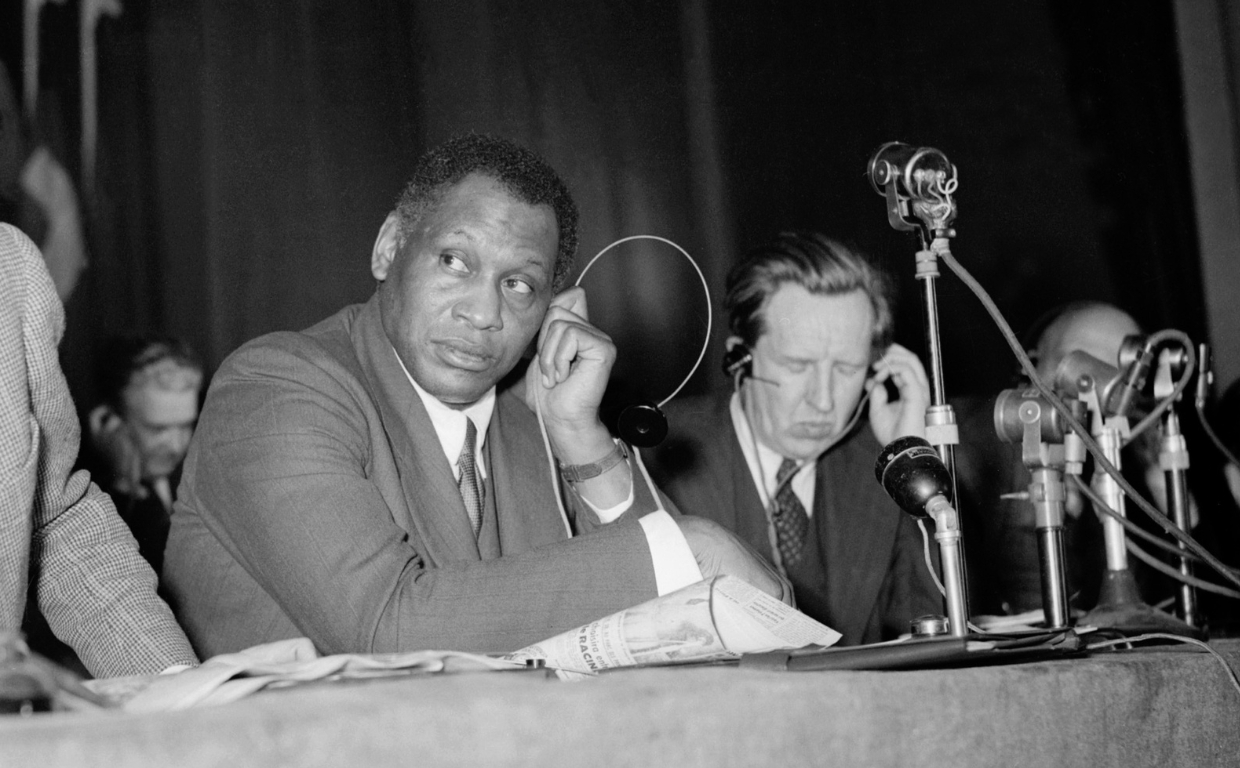
Actor and singer Paul Robeson listens to a speech during the Peace Partisans World Congress in Moscow April 20, 1949, Getty Images.
And now by testifying against Robeson, Jackie Robinson had been placed in opposition to a man he would never meet, whose hand he would never shake. No quarrel had preexisted between the two. After he left Congress that day, Robinson would be lauded as an American hero for all that he had done, but a question now hung uncomfortably in the air: what exactly had he done?
Join us on January 29 at 6PM to hear from Howard Bryant on his latest book, Kings and Pawns: Jackie Robinson and Paul Robeson in America, plus pick up your copy at Shop42.
News
Robinson accomplished a great deal on the field, but a museum celebrating his life puts as much focus on his civil rights work.
READ MORE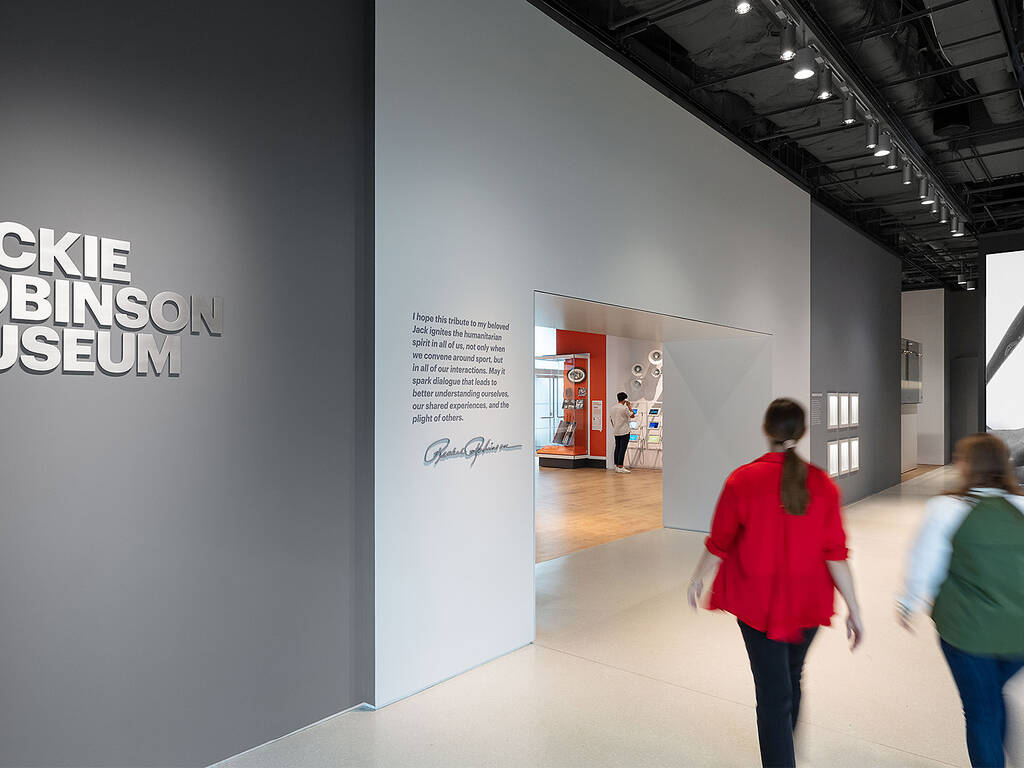
News
Visitors will also get to explore an immersive experience “to better understand the racism and prejudice Robinson encountered beyond the baseball field, as well as stories of his lasting influence on sports, politics and entertainment today.”
READ MORE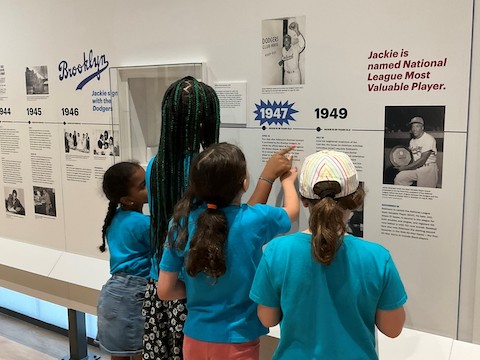
Programs & Events
Get the scoop on new programs and resources for teachers, students, and families!
READ MORE